
Ecosystems for Listening
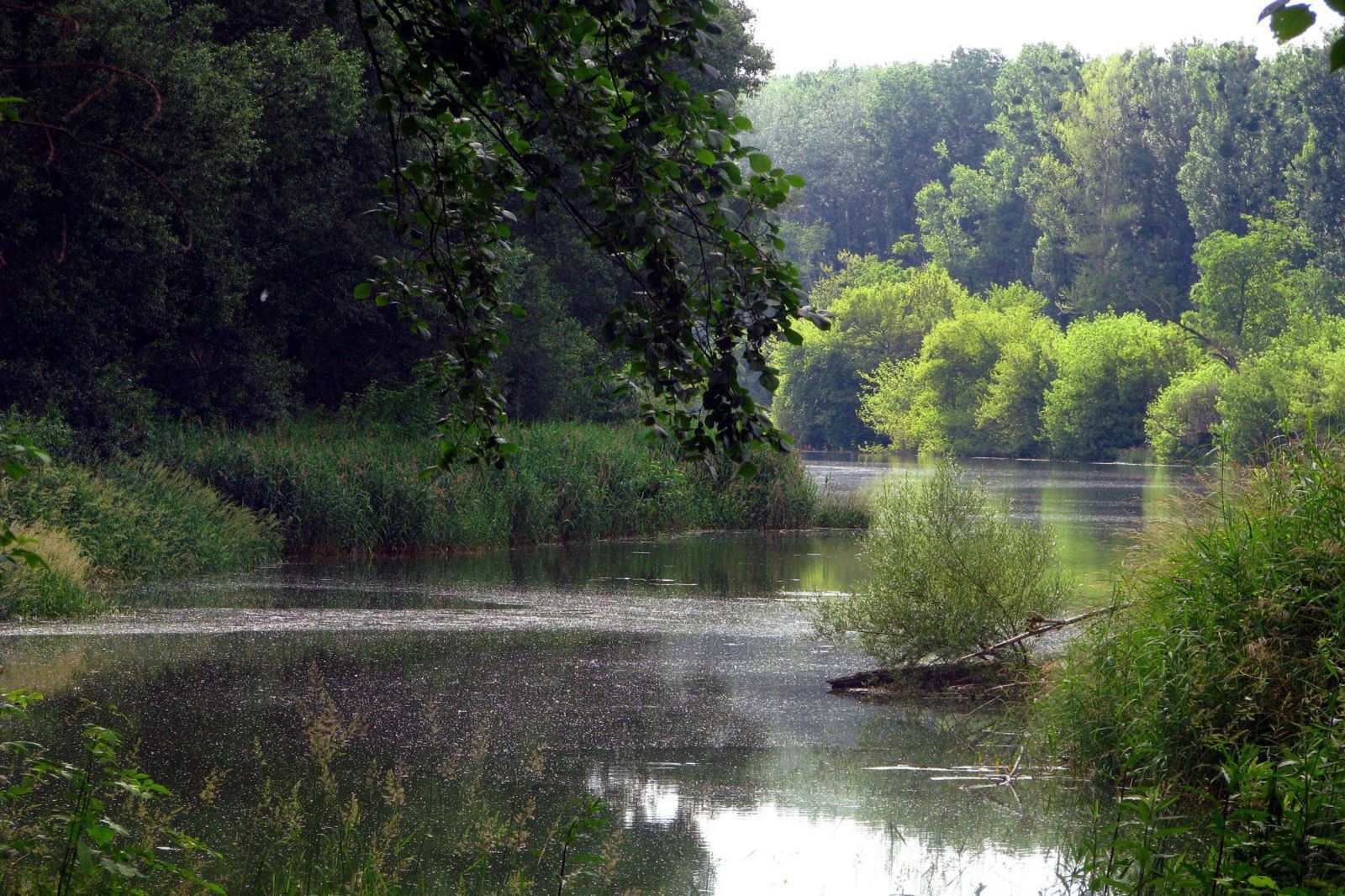
Donau Altarm
Why not start very small, when it comes to looking at the bigger picture?
On opening day, Wien Modern 2026 starts with unexpected sounds by grasshoppers, Japanese leafhoppers, nursery web spiders, wood ants, psyllids, Anopheles mosquitoes and mason bees. On the first few days of the festival, breathtakingly detailed laser microphone sound recordings will be made audible by the Swiss Chuchchepati Orchestra in the foyer of the Wiener Konzerthaus – through large loudspeakers from Chuchchepati (pronounced ‚choo-chepati‘), a district of Kathmandu in Nepal. But insects aren’t even the smallest among the many living creatures which are brought into focus by the numerous artists contributing to the 39th edition of Wien Modern.
In the subsequent opening concert, the focus widens: Viennese composer Pia Palme and her team are developing With The Danube, a full-length work created over many months, not least in the Donau-Auen National Park, which will be premiered by the ORF RSO Vienna, conducted by Irene Delgado-Jiménez in the partially modified Great Hall of the Wiener Konzerthaus. Human and more-than-human contributions converge in a multimedial, cross-species co-creative process. In a kind of contrast to our everyday lives and the news, with what feels like the ever-increasing consequences to human hubris and overconfidence, contemporary music is currently discovering a world in which humans do not take centre stage. Music and art are looking for new ways back to „a lost understanding that human beings, too, are a part of nature and are dependent on their environment and its ability to function“ (Helga Krom-Kolb).
With a lot of humility, yet with a breadth, diversity and depth that seem to grow year on year, musicians, composers and artists explore ecosystems, their balance and their tipping points, on a metaphorical, but often also on a very concrete level. Processes and soundscapes of nature – rivers, trees, forests, birds, insects, soil microorganisms and many more – through field recordings and videos, or simply through careful listening – find their way into the spheres of a kind of music that opens up new perspectives.
This can be sounded out in fascinating ways at Wien Modern over the course of almost five weeks: New Zealand-based deep-listening pioneer Annea Lockwood invites visitors to the MAK, where for a month, visitors can hear a Sound Map of the Danube, featuring sounds from over 50 locations along the river between the Black Forest and the Black Sea. Kirsten Reese and Ensemble Recherche, together with bioacousticians, dedicate themselves to the sounds of the forest – from the Black Forest to Vienna’s only primeval forest. The collective Points of Listening brings the soundscape of Indonesia’s Rungan primeval forest to the Tanzquartier. Katrin Hornek and Judith Unterpertinger invite you to an ascent of Vienna’s most astonishing mountain: the Rautenweg landfill site. Jean-Luc Hervé brings the sounds of drums and insects to the Zacherlfabrik, where they once produced insecticide. Dimitri de Perrot unearths the sounds under the surface of the soil in an impressive lie-down landscape at the Jugendstiltheater. Klangforum Wien, Neue Oper Wien, mdw and others present the Australian composer Liza Lim, one of the pioneers of ecological thinking in new music. The ‘ecophonist’ Katharina Klement is to receive the Erste Bank Composition Prize 2026. The programme also includes a symposium on and around Elisabeth Schimana, a forum/lab with Aleksandra Bajde, workshops and much more.
Alongside these and numerous other investigations into a wide variety of ecosystems, extensive portraits are dedicated to, amongst others, Elfriede Jelinek as part of the Musikverein Perspektiven series, Francesca Verunelli as composer in focus at the Musikverein, as well as Bernhard Leitner at the Secession. A rare performance of Jonathan Harvey’s Bhakti will take place at the Claudio Abbado Concert. Furthermore, Wien Modern celebrates the 100th birthdays of Friedrich Cerha, Morton Feldman, Betsy Jolas and György Kurtág, and pays tribute to Éliane Radigue and Dieter Kaufmann – and to keep a good balance, also features a wealth of emerging talent and over 100 world premieres and first performances.